WHAT IS INSIDE43 units that turn knowledge into action
The live Montenegrin path contains 43 numbered units. They move from controlled first exchanges towards longer listening, grammar and independent responses.
- 10
Foundation · units 1–10
Use greetings, introductions, numbers, food and basic requests. By the end, you can greet someone, introduce yourself, order a coffee and ask a simple follow-up.
- 13
Expansion · units 11–23
Build present and past meaning, case choices and connected answers through picture cards, matching, listening checks and dictation.
- 20
Independent use · units 24–43
Work with longer audio, fuller sentences, role-play and guided production. The goal is to handle a booking, describe a journey and follow a reply in a café.
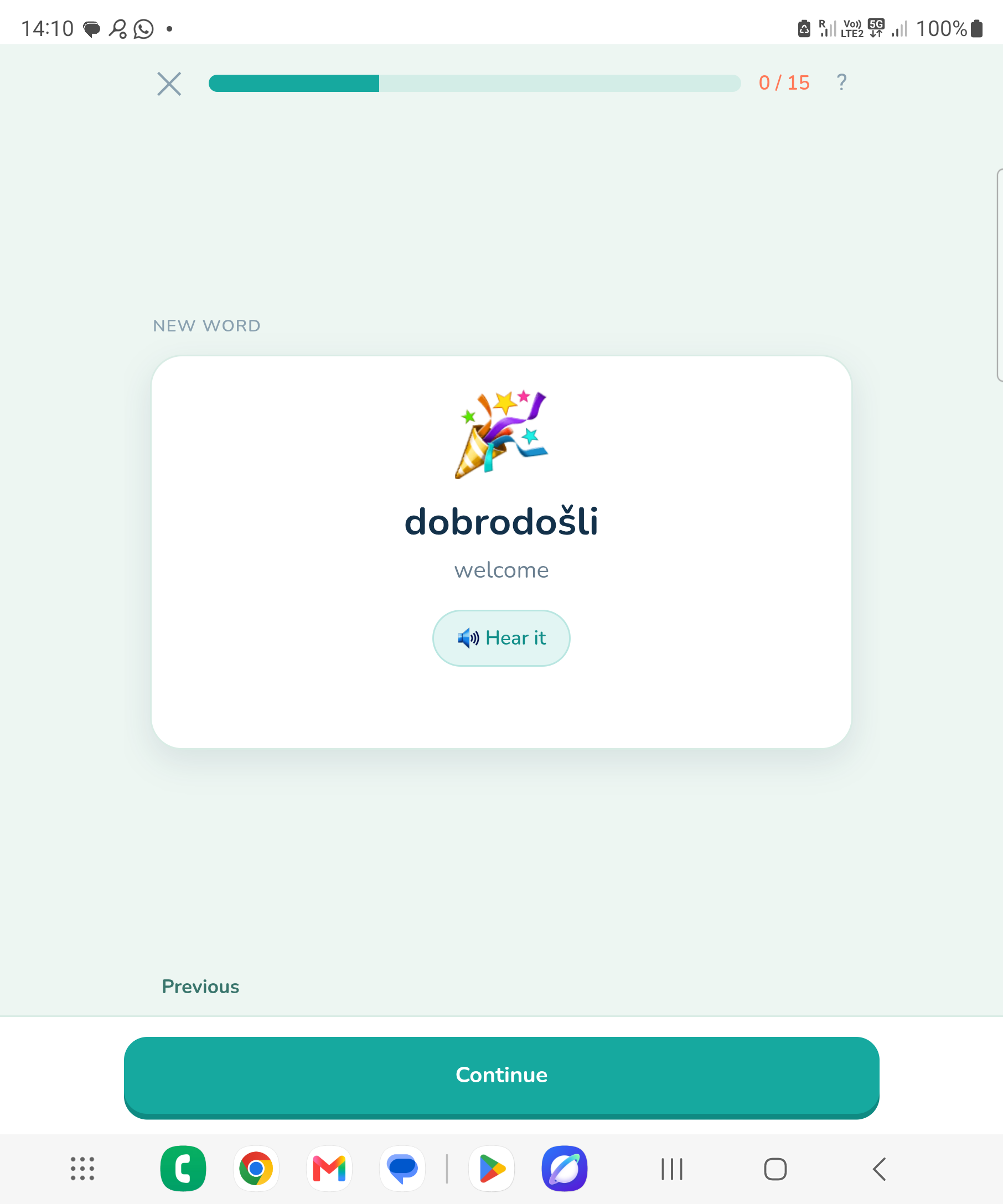
Lessons mix native recordings, picture recognition, sentence building, multiple choice, dictation, say-it prompts and spaced review. The format changes often enough to test listening, reading, memory and speech rather than rewarding one repeated gesture.
What you practise in the Montenegrin path
The opening work is deliberately social: meeting somebody, answering a greeting, saying where you are from and making a polite request. The course then adds the language needed for cafés, shops, accommodation, transport and plans with other people. Grammar appears inside those jobs. Noun gender, agreement and case endings are introduced because a sentence needs them, then returned to in listening and production.
Later units make the input denser. You hear linked sentences, distinguish similar endings, type what you heard and choose a reply that fits the situation. Review does more than replay an old card: it asks for retrieval in several formats. By the end of the path, the learner is working with everyday accounts and explanations rather than isolated labels.
Montenegrin forms and usage are kept visible throughout. The course does not silently replace them with a generic regional version. That matters when the goal is to live, travel or build relationships in Montenegro and recognise what people around you actually say.
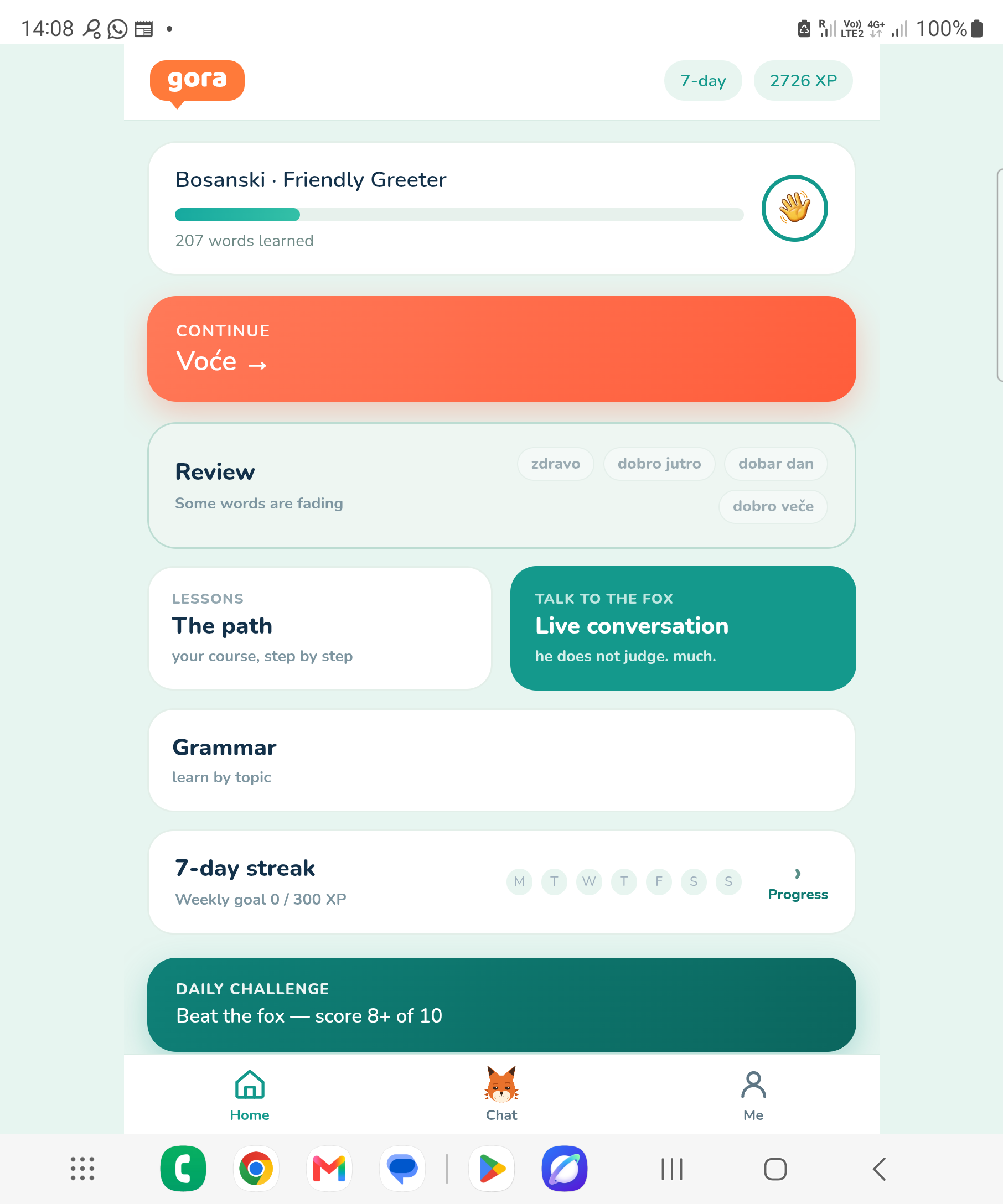
The path also combines focused grammar practice with the main journey. Learners can revisit a weak pattern without losing their place, while the normal sequence continues to provide context, listening and repeated production.