WHAT IS INSIDE43 units that turn knowledge into action
The live Croatian path contains 43 numbered units. They move from controlled first exchanges towards longer listening, grammar and independent responses.
- 10
Foundation · units 1–10
Use greetings, introductions, numbers, food and basic requests. By the end, you can introduce yourself, order politely, ask directions and recognise key replies.
- 13
Expansion · units 11–23
Build present and past meaning, case choices and connected answers through picture cards, matching, listening checks and dictation.
- 20
Independent use · units 24–43
Work with longer audio, fuller sentences, role-play and guided production. The goal is to make a reservation, talk about work and follow practical Croatian at normal pace.
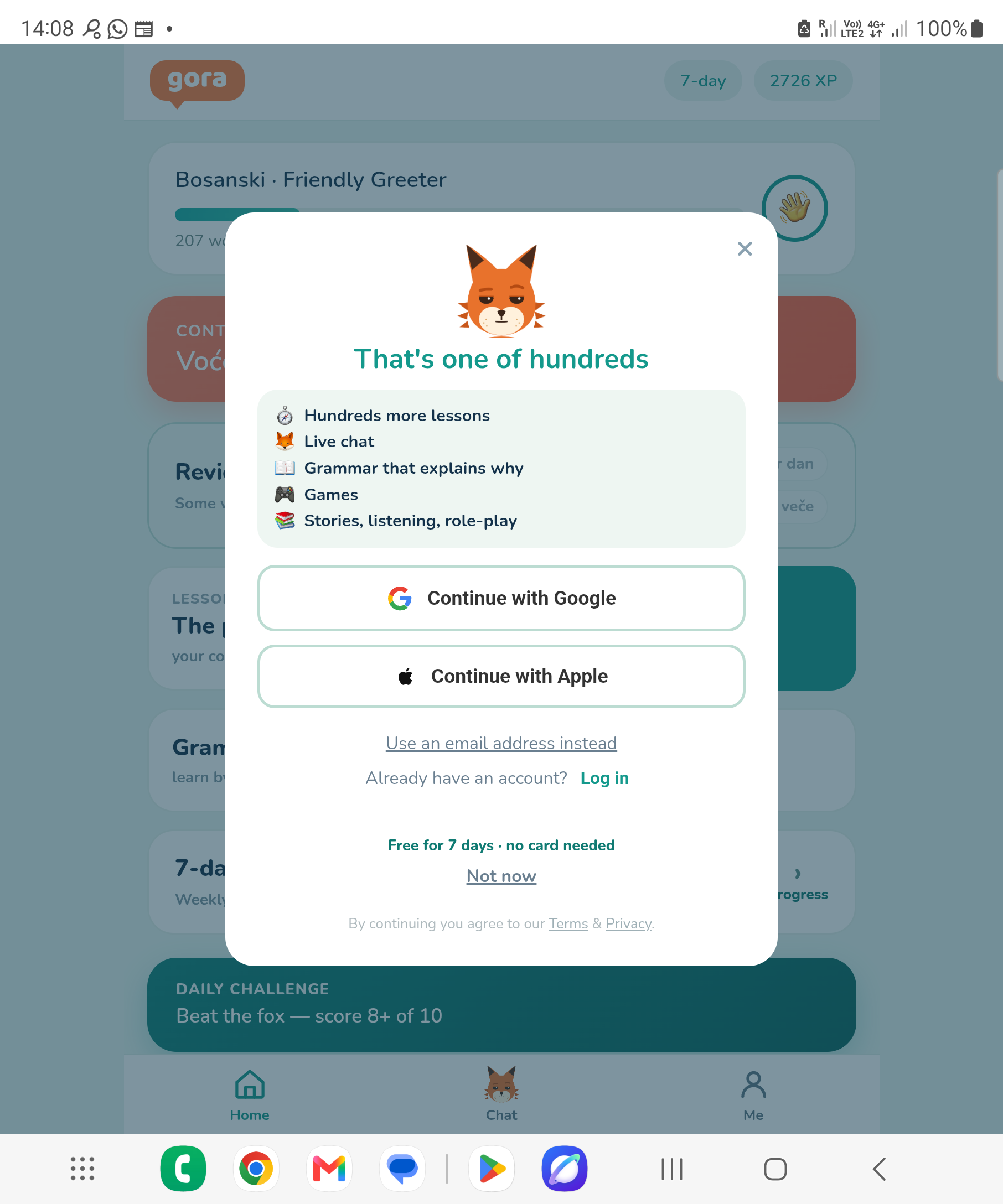
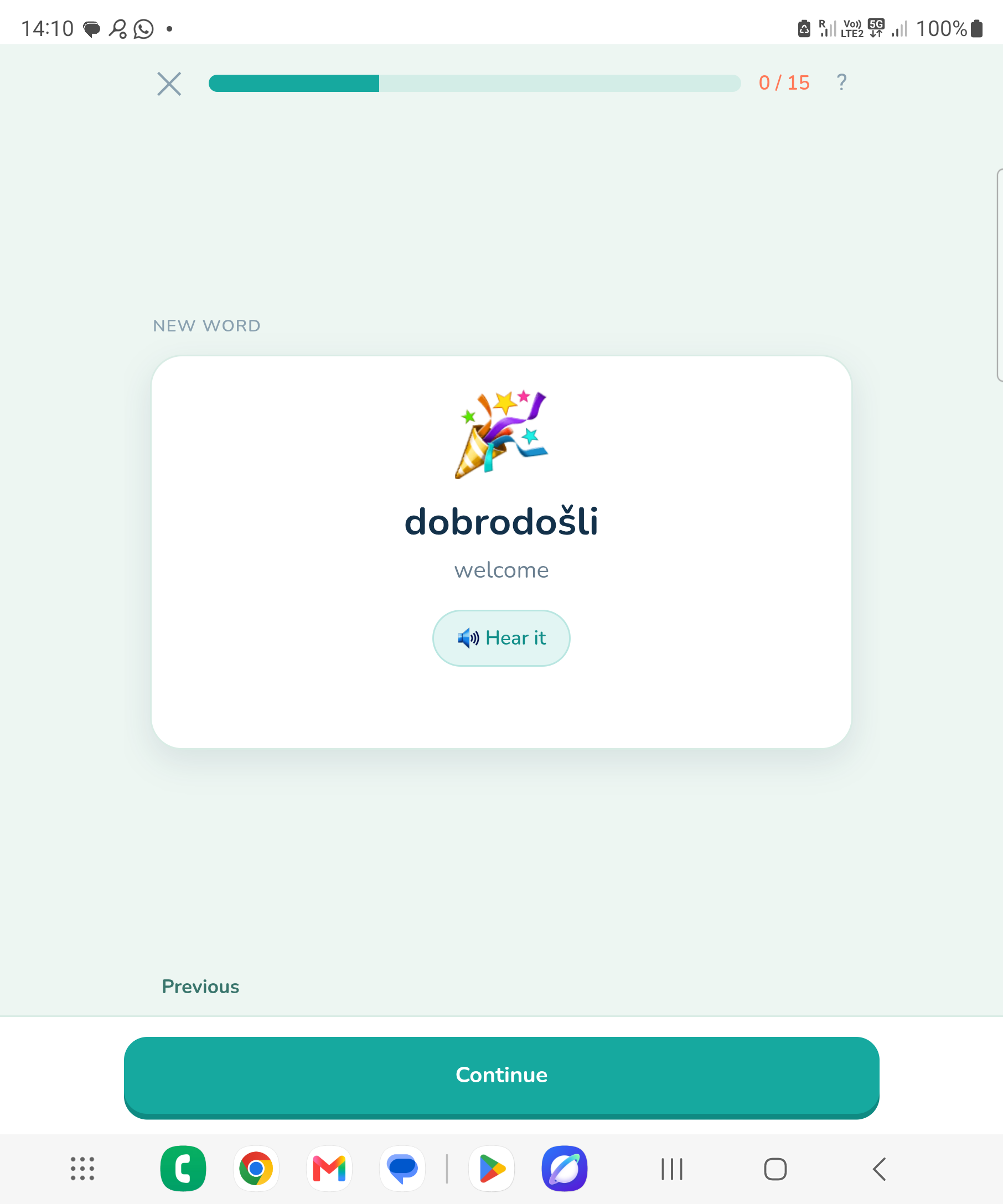
Lessons mix native recordings, picture recognition, sentence building, multiple choice, dictation, say-it prompts and spaced review. The format changes often enough to test listening, reading, memory and speech rather than rewarding one repeated gesture.
What you practise in the Croatian path
The first units teach the language of meeting people, ordering, numbers and everyday movement. A learner hears Croatian before choosing or building the written answer, then sees why a form changes. This keeps pronunciation and grammar attached to a task rather than turning them into two separate subjects.
As the path expands, lessons cover home, food, travel, work and social plans. Picture prompts test meaning without an English cue; dictation checks whether the sounds are clear; sentence building exposes the structure; say-it prompts require an answer aloud. Explanations name the case, agreement or verb pattern at the moment it becomes useful.
The final stretch uses longer listening and connected production. Learners describe events, arrange practical details and respond to fuller questions. Croatian vocabulary and standard forms stay explicit rather than being flattened into a regional composite. The aim is recognition plus control: you should be able to make a reservation, explain what happened and follow the reply you receive.
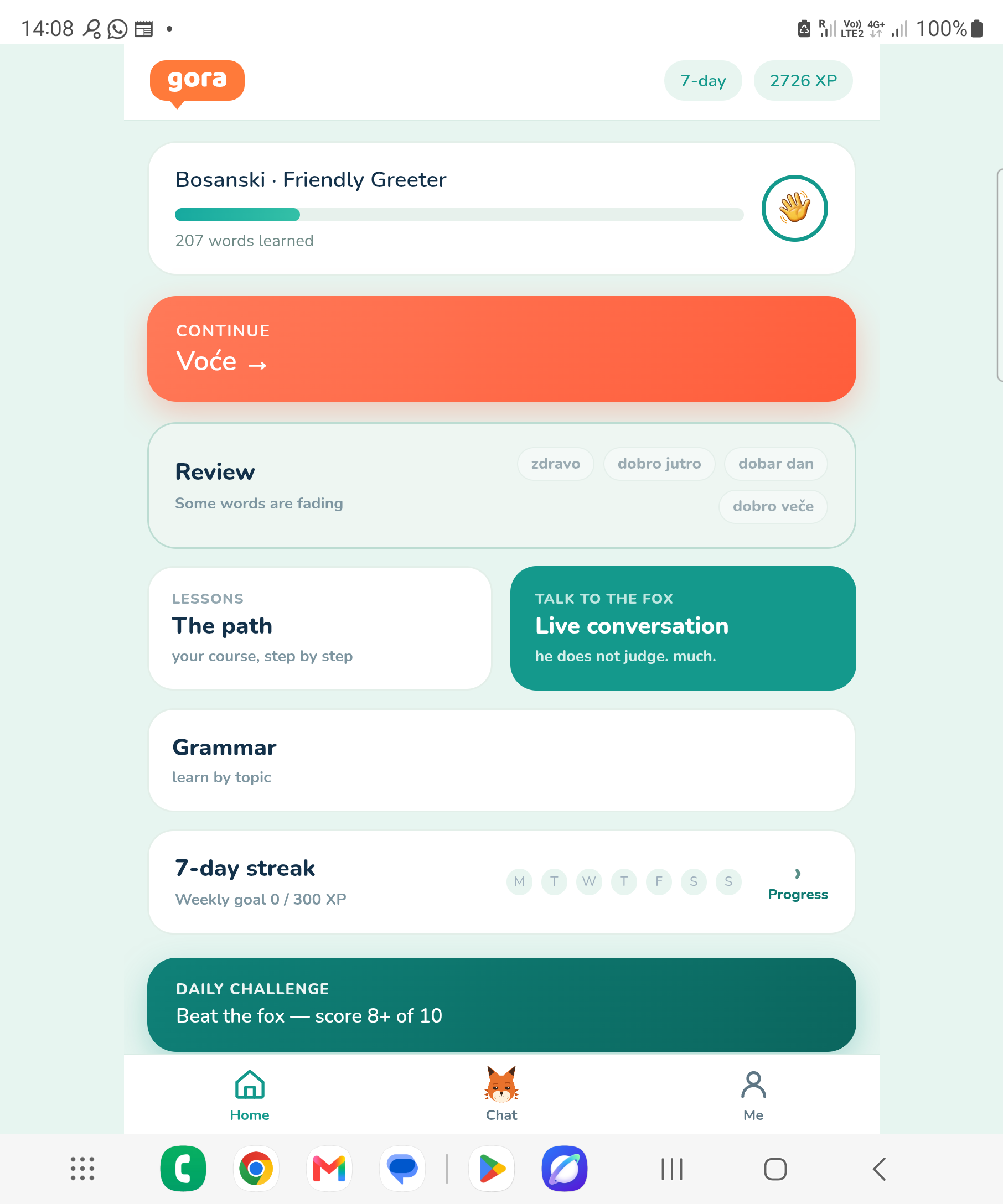
A separate grammar practice area supports the numbered route. Learners can return to a troublesome pattern, then meet it again in course audio, sentences and speaking tasks instead of leaving it as an abstract table.